The property-for-residency door closed in April 2025, but the Costa del Sol has not closed with it. This guide covers the Non-Lucrative Visa, the Digital Nomad Visa and the work routes that still bring people to the coast, and how buying a home fits around them.
For more than a decade, a certain kind of conversation happened on terraces from Estepona to Málaga. A buyer would admire the view over a glass of something cold and ask how much they would need to spend to be allowed to stay. That conversation has ended. Spain's Golden Visa was abolished in April 2025 — buying property no longer grants residency.
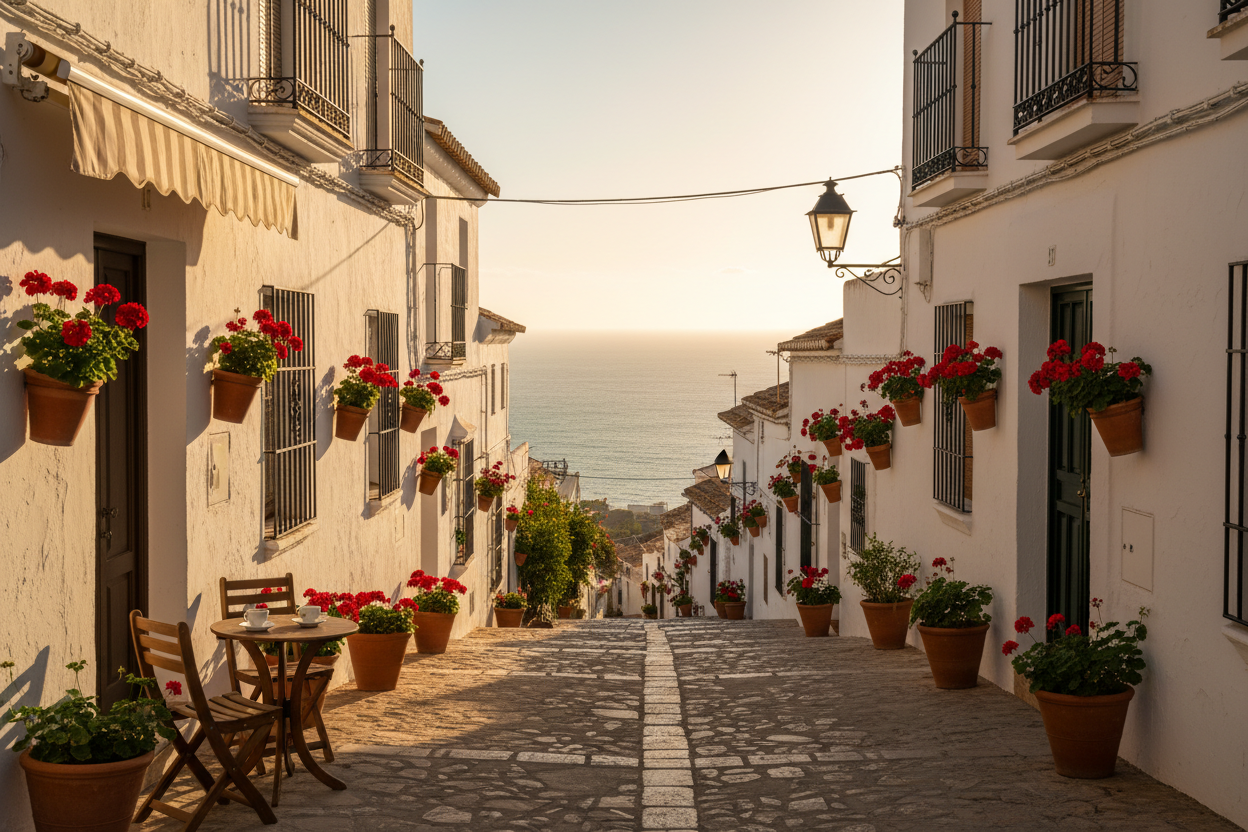
The coast is still open to newcomers, though. The sea still turns pewter at dusk and the Sierra Bermeja still blushes at sunset. People are still arriving: retirees, remote founders, families following a job offer. The real change is the order of things. Today you secure the right to live here first and choose the home second. Here is how that works.
What actually changed
The investor-residency route linked a qualifying investment, including a property purchase, to a residence permit. Ley Orgánica 1/2025 cut that link by emptying the investor-residence articles of the 2013 Entrepreneurs Act (Ley 14/2013) with effect from 3 April 2025. Applications lodged before that date are decided under the old rules, and existing investor permits keep the validity they were issued with, but no new applications can be made.
A villa in the hills or an apartment on the front line can still be bought freely by foreign nationals, and nothing in the change stops a non-resident from owning Spanish property. Ownership simply no longer comes with any right to live here.
In practice, this means you plan the visa and the property as two separate projects. The general rules changed too. A new immigration regulation, Real Decreto 1155/2024, has applied since 20 May 2025 and reset the length of several permits. Before signing anything substantial, confirm with a qualified immigration lawyer or the relevant Spanish consulate which route fits you, because requirements depend on your nationality and circumstances.
The Non-Lucrative Visa: the quiet life, properly documented
Picture a late-morning walk along the paseo, with the market already packed away and the light hard and white on the water. You have no inbox to clear. For a large share of people who move to the Costa del Sol, that is the whole point, and the non-lucrative residence route was designed for them.
The principle is simple. You show that you can support yourself, and any dependants, without working in Spain. Under RD 1155/2024 the minimum is set at 400% of IPREM, Spain's public income reference indicator, per month for the main applicant, plus 100% of IPREM for each dependant. Because IPREM is updated over time, check the current figure when you apply. The consulate will also ask for health insurance with a company authorised in Spain that covers the risks of the public system, a criminal record certificate for the countries where you have lived in the past five years, and a medical certificate.
RD 1155/2024 defines this as residence without any work or professional activity, and Spanish consulates have made clear that remote work for an employer or clients abroad does not fit it either. The first permit lasts one year. Renewals run for two years at a time, and to renew you must show that you actually lived in Spain for more than 183 days in the calendar year. After five years of continuous legal residence, you can apply for long-term residence.
It suits pensioners, people living on investment income, and anyone who has already stepped back from work. It does not suit someone who still answers to a laptop, and that is where the next route comes in.
The Digital Nomad Visa: working from the coast, legally
Imagine a shaded terrace in Estepona's old town at nine in the morning. The geraniums are still wet from the watering can, a café con leche sits by your keyboard, and a call with London or New York starts in ten minutes. The international teleworking visa, created by Spain's Startup Law (Ley 28/2022), exists so that this scene is legal rather than a grey area.
It is aimed at people who work remotely for companies based outside Spain. Freelancers may also take Spanish clients, provided that work stays within 20% of their professional activity. Applicants need a degree from a recognised university, business school or vocational college, or at least three years of relevant experience. They also need at least three months' prior relationship with the employer or clients, and an employer that has been trading for at least a year. Spanish consulates set the income threshold at 200% of the national minimum wage (SMI) per month, plus 75% for the first family member and 25% for each additional one, so close family can come too. Check the current SMI when you apply.
The visa itself is valid for up to a year. From inside Spain you can then apply for the residence permit, which runs for up to three years and is renewable for two years at a time. The Startup Law also opened Spain's special tax regime for incoming workers to remote workers, so take tax advice before you arrive.
The town matters as much as the paperwork. Our Estepona area guide explains why its restored centre and year-round community suit people who want to work and live in the same place.
Work and professional routes: following the job
Some relocations start with an offer letter rather than a daydream. The coast has a real economy behind the beaches, including hospitality, international schools, private healthcare, technology and property services, and a work route is often the most solid foundation of all.
Under RD 1155/2024, a standard employed-work permit lasts for the length of the job up to one year at first, and is limited to one region and occupation. For skilled roles, Ley 14/2013 offers a highly qualified professional permit and the EU Blue Card, both with their own qualification and contract requirements. Self-employed residence also starts with a one-year permit. You must meet the legal requirements for the activity, hold any qualification it needs and show that the planned investment is sufficient. The same Act's entrepreneur route is reserved for innovative projects, or those of special economic interest to Spain, that win a favourable report on their business plan. In each case the evidence takes time to assemble, so plan for patience.
Citizens of EU and EEA countries, and Switzerland, do not need any of these visas. They have a right of residence if they work, study, or have sufficient resources and health cover, and they register their residence once in Spain. This is why the route question comes up so often for British, American and other non-EU buyers.
Where the move meets the market
Once the visa is settled, the house hunt becomes enjoyable again. Many newcomers rent for a season first. They learn which side of the coast catches the winter sun, how the school run feels, and whether they want a marina or a mountain view. Browsing Costa del Sol property to rent is often the most sensible first step.
When you are ready to buy, two fixed points belong in every budget. Andalucía's transfer tax (ITP) on a resale purchase is 7%. Notary, registry and legal fees come on top. New-build homes are taxed differently, through VAT and stamp duty (AJD, 1.2% in Andalucía) rather than ITP, so it is worth clarifying which regime applies before you make an offer. Our guide to Costa del Sol property taxes and fees covers the detail. Every buyer will also need an NIE, and our step-by-step NIE guide explains how to get one.
The choice of area is the part people remember. The Marbella area guide is the natural starting point for anyone weighing polish and prestige against proximity to everything. Estepona appeals to those who prefer a slower, more local rhythm. Inland villages and quieter coastal towns offer more space for the money.
A considered way to arrive
A relocation is never only a transaction. It involves consulates and bank appointments, school applications and the first awkward attempt at ordering in Spanish. At Beyond Blue we keep our selection of homes and new developments deliberately focused, and we stay with our clients from the first thought to the front door. That includes introducing them to independent lawyers who handle the visa side, so the house and the paperwork move forward together.
The Golden Visa has gone, but the reasons people come here have not. Secure the right to stay first, then let the coast persuade you where to put down roots. When you are ready, tell us about your timing and your preferred area, and we will shortlist homes that match how you plan to live here.