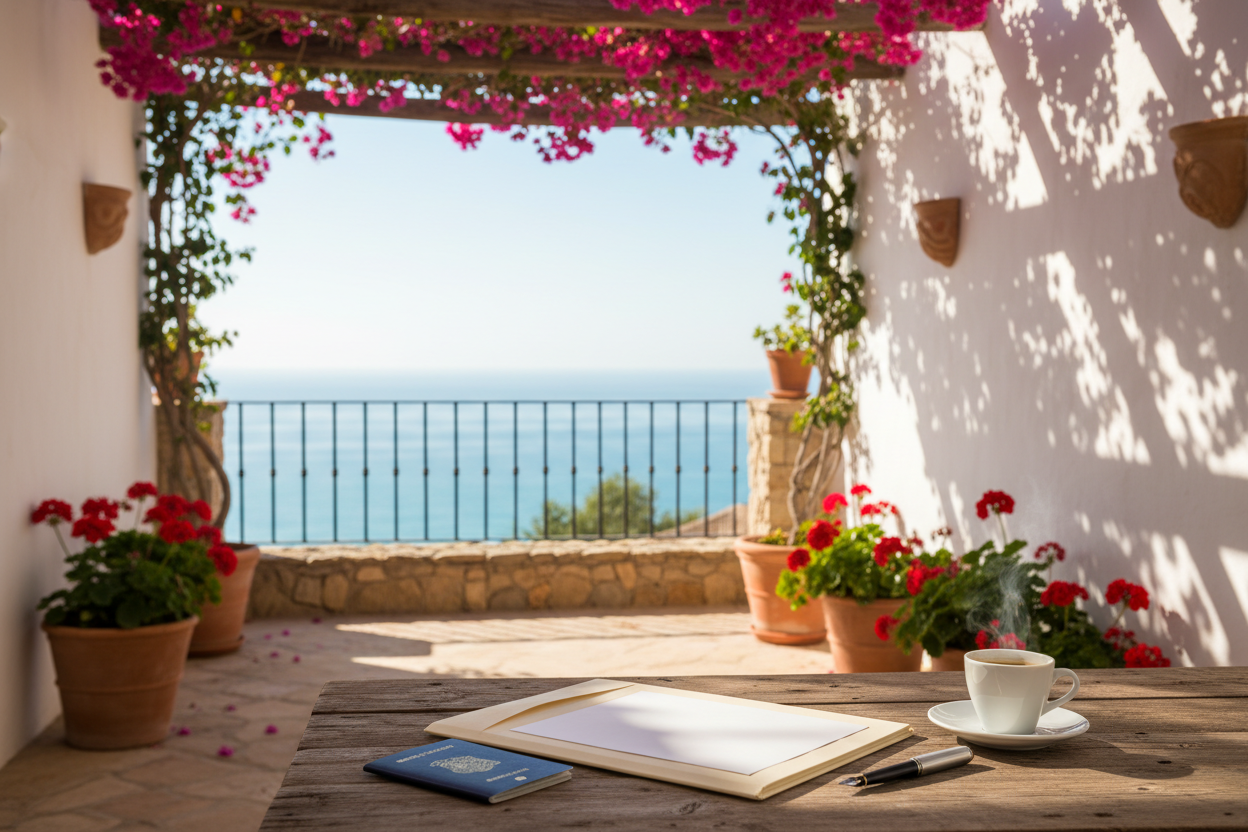
Before the notary, the keys or the first sunset from your new terrace comes a small piece of paper with a long number on it. Here is how property buyers secure their NIE, calmly and in the right order.
Most Costa del Sol property stories begin somewhere glamorous. There is a terrace in Sierra Blanca at dusk, a whitewashed lane in Estepona's old town, or the first swim of the season off a quiet stretch of beach near San Pedro. Very few begin in a government office with a numbered ticket in hand.
Yet almost every purchase in Spain passes through that office, or through a consulate abroad. The document you collect there is the NIE, the Número de Identidad de Extranjero. It is the foreigner's identification number, and without it the rest of the journey stalls. Knowing how to get an NIE in Spain, and when to start, is the least romantic and most useful thing a buyer can learn.
What the NIE is, and why a buyer cannot do without it
Think of the NIE as your fiscal fingerprint in Spain. Under the immigration regulations, foreign nationals who have economic, professional or social dealings with Spain are given a personal, unique and exclusive number that identifies them on every document the authorities issue. Buying property is one of the clearest examples of such dealings.
You will need it to sign the purchase deed before a notary and to pay the taxes due on the purchase. On a resale that means transfer tax: Andalucía's transfer tax (ITP) on a resale purchase is 7%. You will also need it to open a Spanish bank account, register the property and set up utilities in your name. Our guide to Costa del Sol property taxes and fees sets out the wider purchase budget.
One point is worth making plainly, because it still causes confusion. Spain's Golden Visa was abolished in April 2025 — buying property no longer grants residency. An NIE is an identification number, not a residence permit. Holding one says nothing about your right to live in Spain; it simply allows you to transact here. If residence is part of your plan, our piece on how foreigners can still relocate to the Costa del Sol explains the routes that remain.
Step one: decide where you will apply
The first choice sets the pace for everything else. According to the Policía Nacional, you can apply in Spain at an Oficina de Extranjería (foreigners' office) or a National Police station, or, if you are outside Spain, through the Spanish consulate that covers the place where you live.
Applying in Spain means attending in person by appointment, the cita previa. Leave room in your plans for securing a date; it is the step most likely to set your timetable.
The consulate route suits those who would rather arrive with everything settled. Each consulate publishes its own booking arrangements and practical guidance, so read your local consulate's page early rather than relying on what a friend did years ago.
There is also a third way. The Ministry of the Interior accepts applications in Spain lodged by a representative, provided that person holds a power of attorney that expressly authorises them to submit the application. For buyers who do not want to plan a trip around one appointment, this is often the most graceful option, and it leads naturally to the paperwork itself.
Step two: gather the documents
The paperwork is modest, but it must be exact. The core application form is the EX-15, the official request for a foreigner's identity number and certificates. It is submitted in original and copy. You fill in your personal details, tick the reason for the application (economic, professional, social or other interests) and indicate where you are applying. For buyers, the reason is the purchase of property.
You will need your passport, in original and with a copy of the whole document. You will also need to explain the reason for your application. For a buyer, that is typically supported by a reservation agreement, a private purchase contract or another document showing the transaction is under way. Offices can differ in what they ask to see, so treat any checklist as a starting point and confirm locally. If you use a representative, add the power of attorney. Foreign public documents may need legalisation or an apostille and a sworn translation.
This is where a little foresight pays off. If you are viewing homes now, start the NIE process in parallel rather than waiting until you have found the one. The paperwork is easy. The calendar is what catches people out.
Step three: pay the fee
There is a small administrative fee, paid using the government form known as Modelo 790, código 012, which you generate on the Policía Nacional's online fee page. You select the NIE assignment option, print the form and pay at a bank before your appointment. You do not need an account at that bank. The Policía Nacional's fee table currently lists €9.84 for assigning an NIE at the applicant's request; the amount is revised from time to time, so check it when you complete the form.
Keep the stamped receipt. Forget it and the appointment can end before it starts. Put it in the folder with your passport and EX-15, and you are ready for the morning that matters.
Step four: attend the appointment
Arrive early with originals and copies of everything, neatly ordered. The official will check your documents, confirm your details and, if all is in order, process the application.
The Policía Nacional has up to five days to decide on an NIE application. Some offices hand over the certificate the same day; at others you return after a short wait. The certificate carries your number, and the number itself stays with you, appearing on every document the Spanish authorities issue to you. That matters for anyone planning a second property, a later sale or a future move.
A note on the TIE
The NIE should not be confused with the TIE, the Tarjeta de Identidad de Extranjero. The TIE is the physical photo card issued to foreign nationals who hold a visa or permit to stay in Spain for more than six months. If you are buying a holiday home and remain non-resident, the NIE certificate is what you need. If you later become resident through one of the routes that still exist, the TIE follows. Your NIE number remains the thread running through both.
Timing it to the purchase
The calmest buyers we work with follow a simple rhythm. They start the NIE while they are still exploring areas. They open a Spanish bank account once the number arrives. They engage an independent lawyer for due diligence. By the time a reservation is signed, the administrative ground is already level. Our resale buying checklist picks up the story from there.
It also frees you to enjoy the part you came for. You can compare the polished pace of Marbella with the gentler, more local rhythm of Estepona without one eye on the bureaucratic clock.
From number to front door
Beyond Blue is an online agency, but our approach is deliberately human. We keep a considered selection of resale homes and new developments, and we offer personal guidance from your first idea to the moment you turn the key. That includes pointing you towards the right professionals for the NIE, the bank and the legal checks, so that nothing waits on paperwork.
When your NIE is in hand, or on its way, the next step is the enjoyable one. Browse our current Costa del Sol property for sale and tell us which areas, budgets and property types you have in mind. We will shortlist homes that genuinely fit and walk the rest of the road with you.